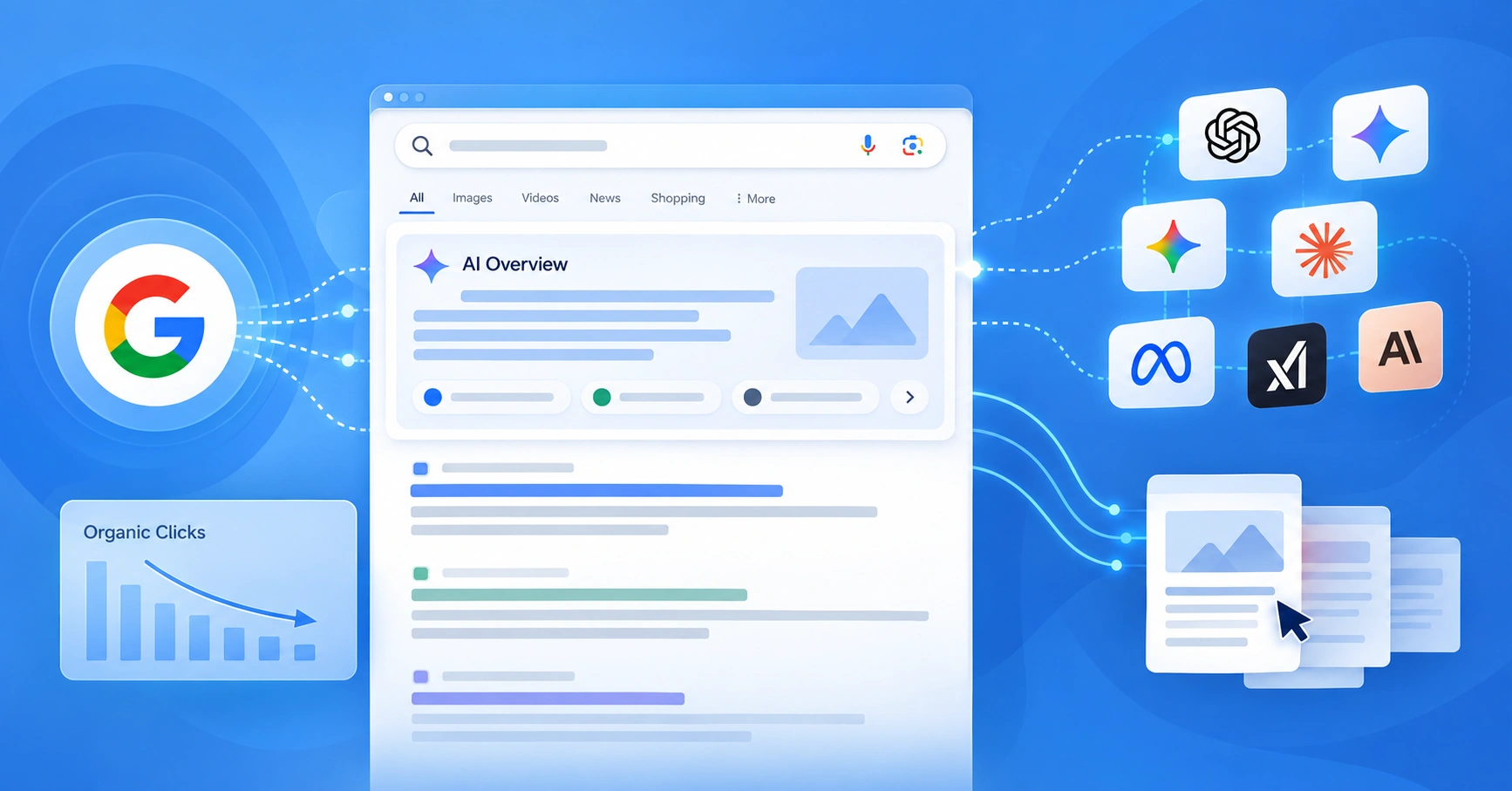
AI search isn't just changing what Google results look like. The data suggests it's also changing what people do after they search and how often they reach websites at all.
An analysis of 68,879 Google searches found that users clicked a traditional search result in 8% of visits when an AI summary appeared, compared with 15% when no AI summary was present. Clicking one of the sources cited directly inside an AI summary was even less common, happening in only 1% of visits.
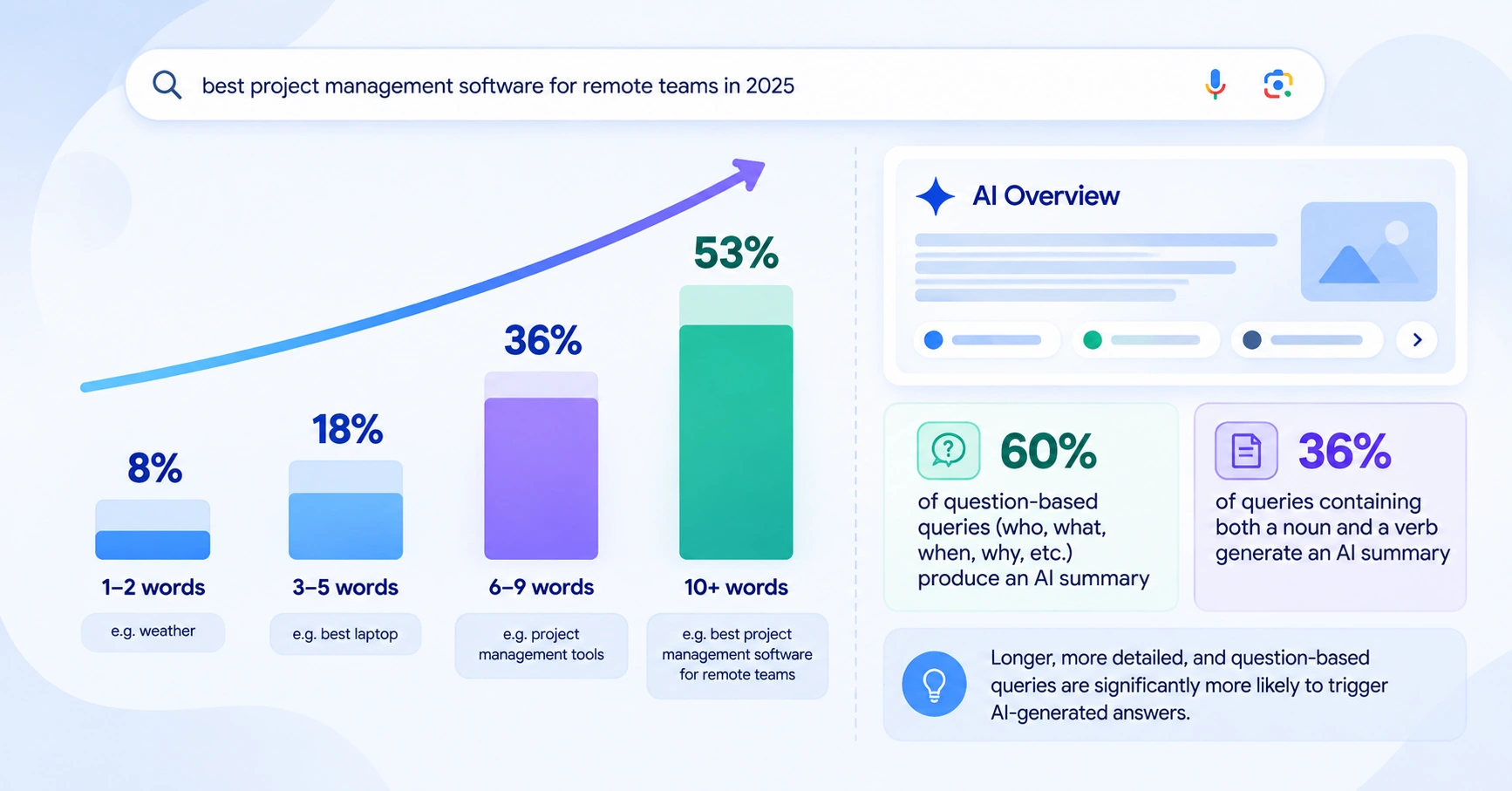
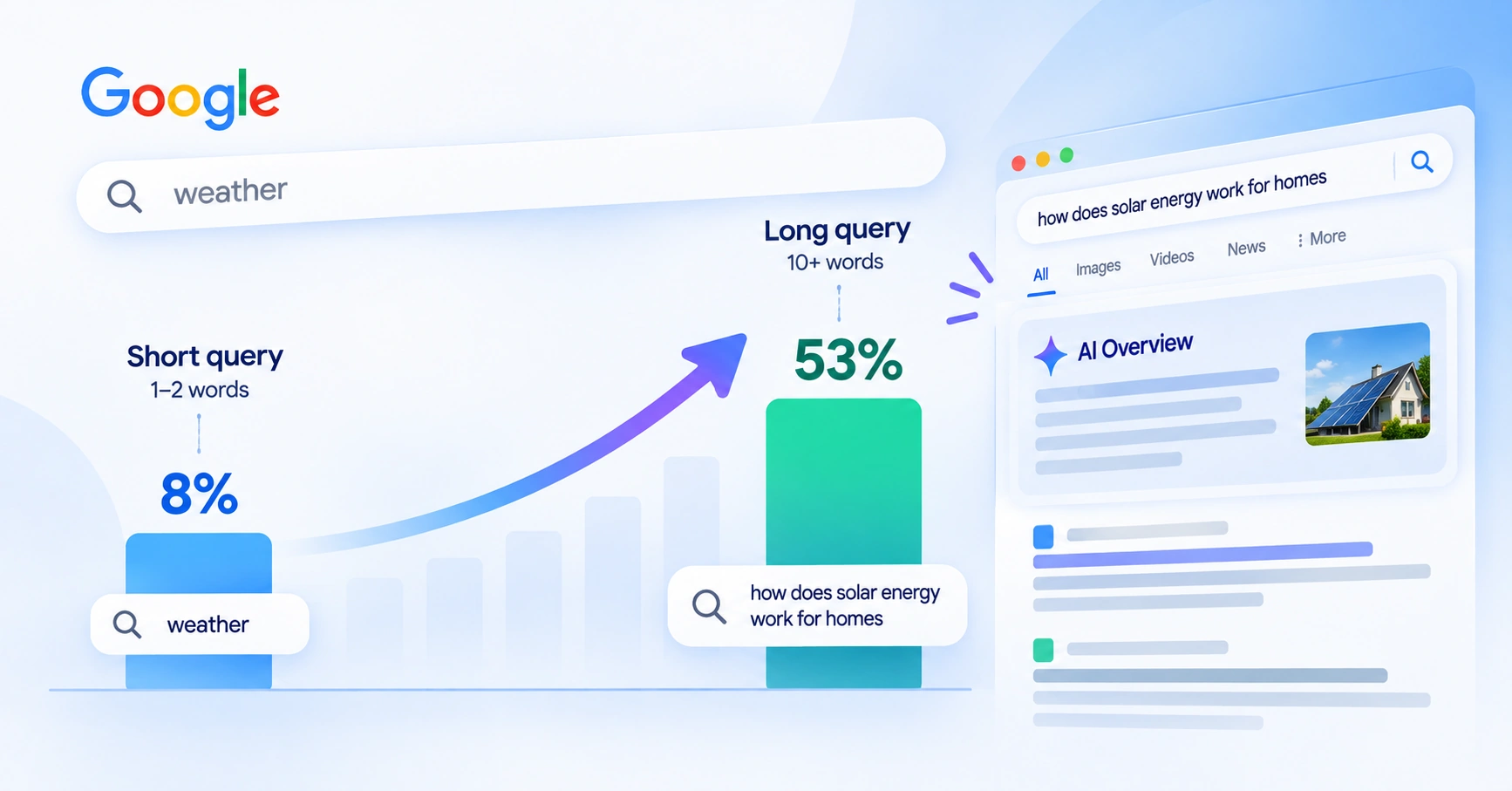
This isn't a small change limited to a handful of unusual searches. The same dataset found that 18% of all analyzed Google searches generated an AI summary, while longer and question-based queries triggered them much more frequently.
The short version: ranking still matters, but earning the organic click becomes a different challenge when part of the answer is already available on the search results page.
Let me show you.
The click gap is already visible
Here's the cleanest way to see the change: compare what people do when an AI summary appears with what happens when it doesn't.
The research examined the browsing behavior of 900 U.S. adults and included 68,879 unique Google searches, of which 12,593 generated an AI summary alongside traditional results. Users who encountered an AI summary clicked a traditional search result in 8% of visits, while users without an AI summary clicked one in 15%.
The difference continues after the search. Users ended their browsing session after 26% of visits with an AI summary, compared with 16% of visits without one.
Those numbers don't prove that AI summaries alone caused every difference in behavior. The types of searches that generate AI summaries can differ from those that don't, so the data needs to be interpreted carefully.
Still, the pattern matters. Organic visibility has traditionally been measured through rankings, impressions, clicks, and the traffic that follows. When more information is available directly inside the search experience, a high-visibility result may not create the same click opportunity it once did.
Longer queries are much more likely to trigger AI summaries
Not every Google query has the same likelihood of producing an AI-generated answer.
Question-based searches showed an even stronger pattern. 60% of queries beginning with question words such as “who,” “what,” “when,” or “why” produced an AI summary, while 36% of searches containing both a noun and a verb generated one.
That gives us a more useful picture than simply saying AI is replacing traditional search. AI-generated answers appear particularly relevant to queries where people need an explanation, comparison, recommendation, or deeper understanding rather than a short navigational answer.
This has a direct implication for content strategy. Informational articles, detailed guides, comparisons, and question-led content are likely to interact with AI-generated search experiences differently from pages built around short branded or navigational queries.
The citation click problem
You might assume that getting cited inside an AI-generated answer solves the traffic problem.
The numbers make that assumption much less comfortable.
When an AI summary appeared, users clicked one of the sources cited directly inside it in only 1% of visits. Most AI summaries weren't relying on a single source either: 88% cited three or more sources, while just 1% cited only one.
That creates an important distinction between AI visibility and referral traffic.
A citation can still expose your brand, research, product, or expertise to someone who may never have discovered it through a traditional search result. But being included in an AI-generated answer shouldn't automatically be treated as the equivalent of earning the first organic position.
If the generated response provides enough information to satisfy the searcher's immediate need, your content may help build the answer without receiving the visit.
That means measuring AI visibility requires a wider view. Organic traffic still matters, but so does understanding where your brand is cited, which pages AI systems reference, how your company is described, and which competitors appear when users research your category.
The zero-click effect gets stronger
The click difference isn't the only behavioral signal worth paying attention to.
That doesn't make organic search irrelevant. It changes what a successful search interaction can look like.
A person may get the initial information they need without clicking, remember a company mentioned in the response, encounter that brand again later, perform a branded search, or eventually convert through another channel. That journey is much harder to attribute than the traditional search → click → landing page path.
The technology behind these experiences helps explain why. AI Overviews and AI Mode can use query fan-out to issue multiple related searches across subtopics and data sources, allowing the system to explore a question more broadly before generating its response.
For site owners, there isn't a separate technical shortcut to unlock that visibility. There are no additional technical requirements or special optimizations required specifically for appearing in AI Overviews or AI Mode. Pages still need to be indexed, eligible to appear in Search with a snippet, technically accessible, and supported by the same foundational SEO practices used across Google Search.
So this isn't a reason to abandon SEO. It's a reason to stop assuming that every valuable search interaction will end with a traditional blue-link click.
AI summaries are becoming part of normal search behavior
The behavioral changes become more important as AI-generated search experiences become more common.
In a survey of 5,153 U.S. adults, 65% said they at least sometimes encounter AI summaries in search results, including 45% who said they see them often or extremely often.
This matters because AI summaries are no longer something businesses can evaluate only as an experimental search feature. For a substantial share of users, generated answers are already becoming part of the normal search interface.
But that doesn't mean every audience will behave the same way. Search habits vary by age, industry, intent, device, and the complexity of the decision being made. A software buyer researching enterprise platforms may interact with AI search very differently from someone looking for a nearby restaurant or typing a known brand name into Google.
That's why AI-search strategy shouldn't begin with the assumption that every website needs exactly the same optimization tactics. It should begin with understanding the questions your audience asks and how search results are changing around those questions.
But AI platforms are also becoming traffic sources
There's another side to the zero-click story.
AI systems don't only answer questions inside their own interfaces. They can also send users to websites, creating a referral channel that is already large enough to measure.
Across a sample of the top 1,000 domains, major AI platforms generated an estimated 1.3 billion referral visits in May 2025. The analysis covered traffic originating from ChatGPT, Perplexity, Gemini, Copilot, Claude, DeepSeek, Grok, and Liner.
The distribution at the top was substantial. YouTube received an estimated 37.9 million AI referral visits, Facebook 10.9 million, Wikipedia 10.1 million, and Amazon's U.S. site 4.6 million. Among news websites, The Guardian received approximately 1.7 million and Reuters around 1.5 million.
These figures measure referrals from standalone AI platforms rather than clicks from Google's AI summaries, so they shouldn't be treated as the same dataset.
But that's exactly what makes the comparison useful.
AI search is creating two changes at once: some informational searches may generate fewer traditional organic clicks, while AI assistants are simultaneously developing into a new source of referral traffic.
The opportunity isn't simply to replace lost Google traffic with ChatGPT or another AI platform. It's to understand whether your brand is discoverable across the expanding set of systems people use to research questions, compare options, and make decisions.
The business impact could be much bigger than traffic
Traffic tells us what happens after someone encounters an answer. Consumer behavior tells us why businesses should pay attention before the click happens.
A representative U.S. survey of 1,927 consumers found that about half intentionally use AI-powered search. Among AI-search users, 44% said it was their primary and preferred source of insight, compared with 31% for traditional search, 9% for retailer or brand websites, and 6% for review sites.
The behavior also reaches further into the buying journey. More than 70% of AI-powered search users ask top-of-funnel questions to learn about categories, products, services, and brands, while AI search is also being used to inform purchasing decisions across sectors such as travel, consumer electronics, wellness, apparel, beauty, grocery, and financial services.
Then come the projections.
By 2028, an estimated $750 billion in U.S. consumer spending could flow through AI-powered search. The same analysis projects that brands that fail to adapt could see 20% to 50% of traffic from traditional search at risk as AI systems influence decisions earlier in the customer journey.
Those are projections, not observed outcomes, and they should be treated that way.
But they point toward something much bigger than a decline in organic click-through rate. Search has traditionally been one of the main doors through which consumers enter a company's digital experience. AI search can move part of the research, comparison, and decision-making process outside the website entirely.
Your own website may be only part of the AI visibility equation
This is where AI search starts challenging one of the assumptions behind traditional SEO: that improving your own website is the primary route to improving your visibility.
In many cases, a brand's own website represents only 5% to 10% of the sources referenced by AI-powered search. The remaining information can come from a much broader source ecosystem, including publishers, affiliates, user-generated content, reviews, forums, and other independent websites.
That doesn't make your own website less important. It's still where you control your product information, service details, expertise, original research, technical accessibility, and conversion experience. For Google specifically, a page must still be indexed and eligible to appear in Search with a snippet before it can qualify as a supporting link in AI Overviews or AI Mode.
But improving your homepage alone may not be enough to influence how AI systems understand your company.
If independent sources consistently describe one competitor as the strongest option in your category, your own claim that you're the market leader carries limited independent evidence. If third-party pages contain outdated information about your product, correcting your website doesn't automatically update the wider information environment.
The job is becoming broader build a strong first-party website, but also understand the external sources influencing discovery around your category.
What this means for organic search strategy
The data doesn't support the idea that SEO is dead. It supports something more nuanced: the relationship between visibility, clicks, and discovery is changing.
Traditional-result clicks dropped from 15% on searches without an AI summary to 8% when one appeared. Longer searches were substantially more likely to trigger generated answers, and AI-summary citations themselves received clicks in only 1% of visits in the same dataset.
At the same time, AI platforms generated an estimated 1.3 billion referrals to the top 1,000 domains in a single month, while roughly half of consumers in a separate survey said they intentionally use AI-powered search.
The practical response isn't to invent an entirely new SEO playbook around unverified AI ranking factors. In fact, foundational SEO practices remain relevant to generative AI search. Technical accessibility, useful and original content, internal linking, good page experience, relevant images and videos, and accurate structured data continue to matter.
The difference is that measurement needs to expand beyond rankings alone. Businesses need to understand which questions trigger AI experiences, where their brand appears, which competitors and third-party sources influence those answers, and whether AI discovery eventually contributes to referrals, branded searches, leads, or conversions.
Most importantly, don't build an AI-search strategy around unsupported percentages or supposed secret ranking factors.
The verified numbers already tell a stronger story: AI search is changing where the answer happens, how often the click happens, and which sources influence the customer before they ever reach your website.